The 23-Year-Old Redefining Motherhood in Literature
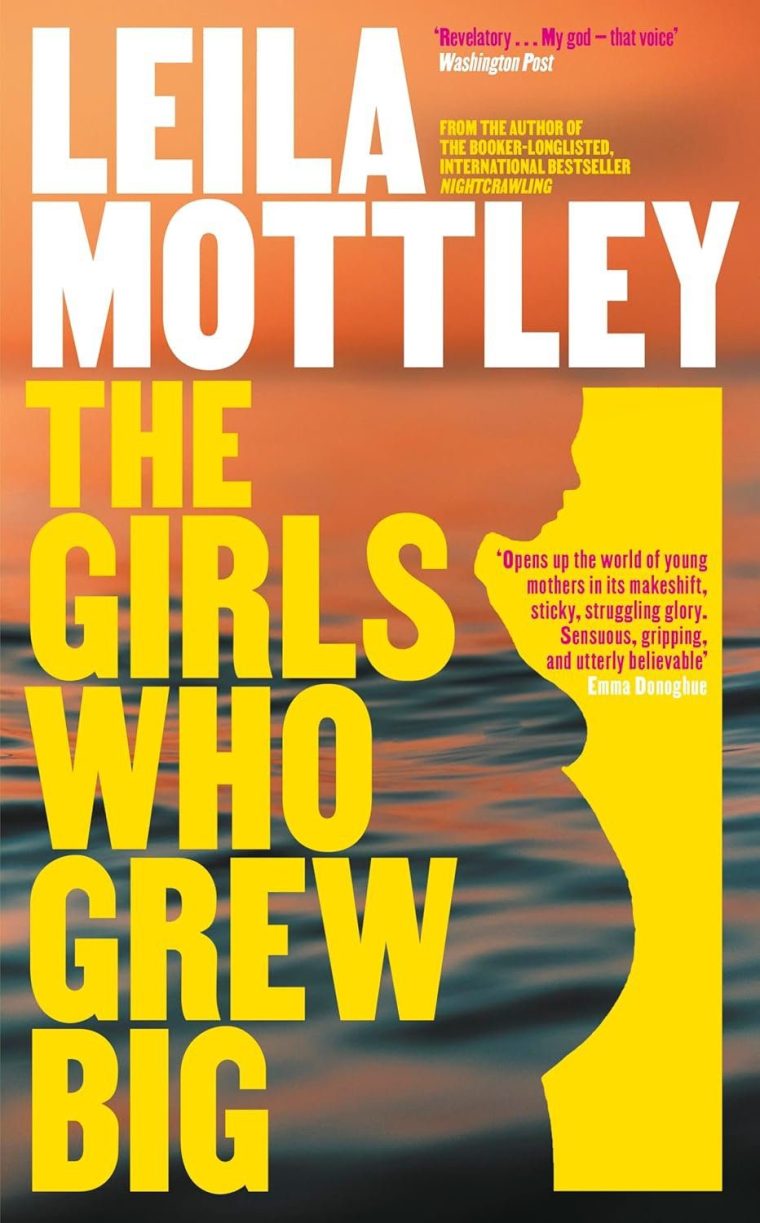
From the very first paragraph of Leila Mottley ’s second novel, it’s clear this young writer is not interested in adhering to social norms about how women should talk about their most intimate moments.
“Nobody ever warns you about the placenta,” begins The Girls Who Grew Big . “Like, you spend days seizing and stretching open to get some shoulders out your coochie and then the baby, or the babies in my case, are writhing in your arms, and you realize it’s not even over. You’ve still gotta push out this pulsing purple heart bigger than your man’s head – and my man had a big-ass head – and find a way to cut the cords.”
Mottley, who is from Oakland, California, rose to international prominence when the 2022 longlisting of her debut novel Nightcrawling (which she wrote when she was just 17) made her the youngest-ever Booker Prize nominee at age 20. That book told the story of Kiara, a teenager looking after a little boy whose mother disappeared, going up against a corrupt police force. Now 23, Mottley returns with a big-hearted story told over the course of nine months from the perspectives of three young women living in the fictional town of Padua Beach, Florida.
The first is Simone, who narrates that opening chapter. She is the mother of four-year-old twins Luck and Lion, whom she had when she was 16 and their father, nicknamed Tooth, was 22 (“I knew how it looked,” she admits). Of all the characters, Simone’s Floridian drawl is the most overt: “Telling a man you pregnant with his child is like taking a bite of a tender peach,” Mottley writes. Straight-talking, brash and known to get violent, she epitomises the snobbish stereotype of teenage mothers who grew up in trailer parks.
So, wisely, Mottley makes Simone not only highly aware of how others perceive her (“Sure, our accents slung themselves into the room ’fore we even made it through the door”), but also the moral centre of this story.
After being kicked out of her parents’ home for getting pregnant, she lives with Luck and Lion out of a red pick-up truck. Tooth, a lazy, sex-obsessed man who has a disturbing predilection for underage girls, isn’t any help to her, and once she learns she is expecting again, she decides to end both her relationship and her pregnancy.
Gladly, she isn’t alone, because she has the Girls, a group of other local young mothers whose families have cast them aside. The group may be frowned upon by their conservative neighbours, but if any of the Girls are in need of support, all they have to do is look for Simone’s red truck, which has become a haven of safety and a nest of co-parenting, with Simone its queen bee. “I taught them how to rid a child of gas, how to fish a pebble from their mouths, how to cure mastitis. They taught me family could be something tender and loud and boundless,” she says, movingly.
One of those girls is Emory, a new mother to weeks-old Kai with on-off boyfriend Jayden (Simone’s brother), who is nonetheless determined to finish high school and get into a top university. Emory has lived with her grandparents since she was five, after her addict parents abandoned her. “Grammy and Pawpaw kept me fed and loved me to pieces,” Mottley writes – until they learnt the father of Emory’s child is black.
The third girl is Adela, who is 16 and pregnant. Her parents have sent her away from her Indiana hometown to stay with her grandmother in Padua, where – they hope – she will have the baby, give it up and return home to continue her champion swimming career. Of course, when Adela finds the Girls, and after some drama, is eventually taken into their loving circle, she isn’t so sure she will leave when the nine months is up.
Mottley isn’t a mother herself, though she addresses her “future children” in the book’s acknowledgements. But in 2021 she trained as a doula, working with clients throughout pregnancy, birth and postpartum. This experience unquestionably informed The Girls Who Grew Big , in which Mottley writes about biological processes – and the mental toll on the women enduring them – with an impressive assuredness.
Her no-nonsense approach to detailing the messy, sticky reality of childbirth to a degree that prudes will quake at continues throughout: pregnancy made Simone feel “stretched out like an old sock by a big foot”, while early motherhood turned her “coochie into a swampland”.
Alongside this, Mottley upends heteronormative expectations by showing how a single woman can be a good parent – especially when surrounded by other women. Almost all the men in The Girls Who Grew Big are useless people whom their partners, children and grandchildren would be better off without – although societal and financial pressures make that very difficult.
Read Next: 14 great love stories to read this summer
Mottley’s refreshing, no-holds-barred approach sees her join the ranks of other Gen-Z novelists who are reinventing how motherhood is portrayed in literature, such as Saba Sams , whose book Gunk follows a woman who becomes the mother to a child carried by her friend, and Rowe Irvin, whose Life Cycle of a Moth tells of a woman who births and raises her daughter at a total remove from patriarchal society.
That Mottley writes so freely about childbirth cannot be untethered from the political time in which she is writing. In 2025, we are at a confounding place when it comes to social attitudes towards women’s bodies: on one hand, in many cultures women have never been so free to present themselves exactly how they wish, while thanks to the internet we have never had such easy access to information about women’s medicine, pregnancy, childbirth and the menopause. Yet on the other hand, since the US Supreme Court’s 2022 overturning of Roe v Wade , the progression of women’s reproductive rights has made an abrupt U-turn.
In order to end her unwanted pregnancy, Simone must overcome an “impossible” predicament, finding $600, as well as childcare for her twins for the two days the trip will take. An adviser from Planned Parenthood tells her she can get an abortion via medication up until 11 weeks after her last period, which gives her six weeks from now. After another four weeks, she will no longer be able to receive an abortion at all, surgically or otherwise, in the state of Florida. This 15-week policy was true between July 2022 and April 2024, but is now even more stringent: last year the state outlawed all abortions after six weeks . (For comparison, in England, Scotland and Wales, the limit is 24 weeks.)
So instead, the Girls help Simone induce an abortion in a basement bathtub, as a ferocious storm battles outside. “You might think it’s dangerous, naive, misguided, to do it like this,” writes Mottley, in Simone’s candid second person, “but it is more dangerous to birth a child into this world unwanted.”
It’s a poignant admission of the cruel reality in which the criminalisation of abortion leaves vulnerable women – and a reminder of how lucky we are to have Mottley’s clear-sighted writing ensuring we never forget that fact, nor those women.
The Girls Who Grew Big is published by Fig Tree, £16.99
