Coroner Blames Hospital's Organizational Failings in Man's Death After 11-Hour ER Wait at Châteauguay
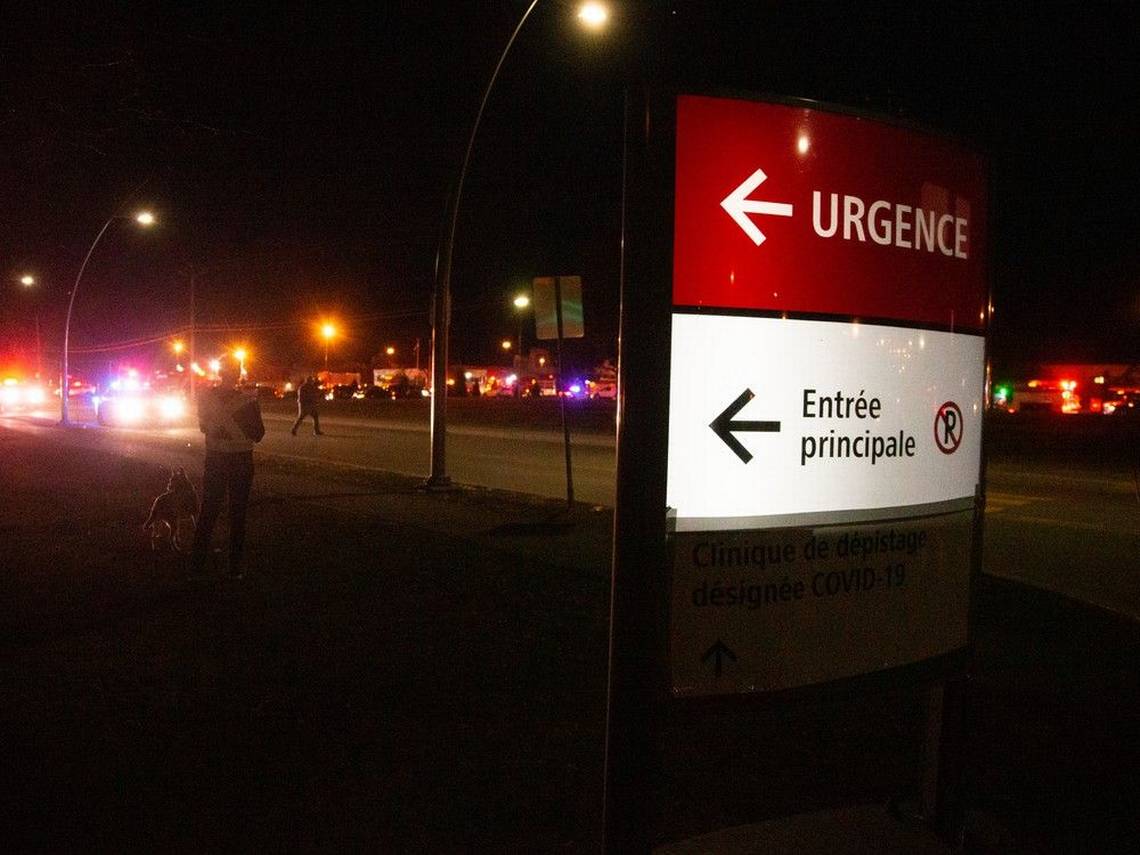
In the winter of 2023, 80-year-old Yvon Brossoit was rushed by ambulance to a South Shore hospital after suffering severe abdominal pain and fainting.
For the next 11 hours, Brossoit sat in a wheelchair in Anna-Laberge Hospital’s overcrowded emergency room without being re-evaluated.
Around 11:45 p.m., he went into cardiac arrest. An hour later, he was pronounced dead.
In a recent report, Quebec coroner Jean Brochu found Brossoit died from a ruptured abdominal aortic aneurysm, but shed light on several organizational issues affecting the hospital’s emergency room at the time.
The report states that when Brossoit first arrived at the Châteauguay hospital, he was triaged as a Priority 3 patient. The classification meant that while he wasn’t in immediate danger, he should be re-evaluated by a nurse every 30 minutes.
Yet, the only care Brossoit received during his stay came more than five hours after his arrival, when the person accompanying him informed a nurse he was still experiencing abdominal pain. A nurse then checked his blood pressure and gave him two pills for pain relief.
According to the coroner’s report, the hospital’s emergency room was operating at 191 per cent capacity that day. There were 20 patients who had been waiting to see a doctor for more than 48 hours.
Brossoit’s death was one of two to occur in the hospital’s emergency room that November. Another was reported the following March, bringing the total to three within a matter of months .
“We’re seeing more and more people dying in emergency rooms,” longtime patient-rights advocate Paul Brunet said in an interview Monday.
Brunet said he understands that emergency rooms are overcrowded and the heavy workload nurses face, but said it doesn’t excuse a Priority 3 patient not being re-evaluated at least every hour.
“It wasn’t done,” Brunet said. “Had he been re-evaluated before, they would have had the time to transfer him and save his life.”
The coroner’s report details how the team in charge of quality, performance and ethics at the hospital launched an investigation following Brossoit’s death.
That investigation concluded that staff did not adhere to the established protocols for Priority 3 patients, specifically by failing to re-evaluate Brossoit every 30 minutes after his admission.
It noted Brossoit should have been given a stretcher with a heart monitor instead of being sent to the waiting room and that the hospital didn’t have a computerized system allowing it to have an overview of all emergency room patients.
The investigation concluded that the “organizational context, the organization of resources, and the functioning of the emergency department” at the hospital played a role in how Brossoit’s condition evolved during his stay.
Since the hospital is already implementing changes suggested after the investigation, Brochu wrote he did not feel it necessary to make additional recommendations as a coroner.
But he noted that some issues will require continued attention, including that patients waiting in the emergency room are properly re-evaluated according to triage guidelines.
In an email response sent on Monday, the regional health board that oversees the hospital, the CISSS de la Montérégie-Ouest, said it took “swift action” following Brossoit’s death.
“Not only have the vast majority of recommendations been implemented, but significant improvements have been noted,” wrote spokesperson Jade St-Jean.
The hospital has since seen a 20 per cent decrease in emergency room occupancy and a “notable reduction” in the average length of stay, St-Jean said.
“These improvements are the result of an unprecedented mobilization of all departments and physicians,” St-Jean added, “who worked closely together to find concrete solutions to prevent a similar situation from recurring.”
