Grill-Friendly, Minimally Processed BBQ Picks for Your Next Cookout
Barbecues are undoubtedly a highlight of the summer, but how many ultra-processed foods are lurking on your plate?
“I always encourage people to enjoy social events like barbecues without guilt – but being mindful of ultra-processed foods can make a difference to our health,” says nutritionist Sophie Bertrand.
“ UPFs often contain additives, refined ingredients, and excess salt, sugar, or unhealthy fats, which can contribute to inflammation, poor gut health, and chronic disease risk over time,” she explains. So if you’re planning to grill all summer long, a few smart swaps will make them more nutritious and even more delicious.
Sammie Gill, registered dietitian and British Dietetic Association (BDA) spokesperson, echoes this, adding: “The advice is to limit, not totally avoid (unless you want to). Having a burger or a couple of sausages at a family barbecue over the summer is not going to harm your health. Just be mindful of the amount you’re having and how often. What’s important is what you’re consistently eating over the long-term, not single days in isolation or meals you have occasionally.”
Choose chicken and high quality sausages over chorizo and bacon
Processed meats are preserved using a curing method. “That’s why they last in your fridge for weeks without spoiling; unlike fresh meats like chicken,” explains Gill. “The World Health Organization (WHO) has classified processed meat as carcinogenic – meaning there is strong evidence linking them to an increased risk of cancer, including colorectal cancer.”
The reason is due to the chemicals used in the curing process, specifically nitrates and nitrites. “When packaged in meat which are high in protein and cooked at high temperatures, nitrates and nitrites can more easily transform into nitrosamines – the chemical that is considered a cancer-causing compound,” she explains.
Most sausages are UPF , and they’re never been considered a healthy food – although good butchers will have sausages made with just pork, breadcrumbs and herbs. “There are big differences in the quality of meat products you can buy from your local supermarket,” says Gill. “Choose sausages made from at least 80 per cent meat, which have a lower percentage of fillers (such as cereal husks), and minimal preservatives.”
Make your own burgers
The burgers at your local supermarket are probably ultra-processed, explains nutritionist Jenna Hope. “Unless stated, they are rarely 100 per cent meat, and are often loaded with artificial ingredients like bulking agents, fillers and salt,” she says. “These ingredients can negatively impact the gut microbiome, disrupting the gut lining and increasing blood pressure.”
Bertrand suggests making your own lean burger patties using either ground turkey, chicken, or grass-fed beef with herbs and spices.
Red meat is classed as a ‘probable carcinogen’ by the WHO, meaning there is some evidence linking red meat to an increased risk of cancer, unlike white meat, such as chicken, or fish, explains Gill, who adds that red meat also tends to be higher in saturated fat, a high intake of which is linked to cardiovascular disease.
Read Next: I had five miscarriages – I’ll never know why
Try fish and mushrooms instead of fake meat
It’s easy to gorge at a BBQ, and before you know it you’ve chowed down several hot dogs, a couple of burgers, and that’s before the steaks, ribs and chops have come out. Rather than abstaining completely, Gill suggests keeping an eye on how much red meat you’re having.
Swap out a meat option for “smarter proteins” like a portion of oily fish, suggests dietitian Lola Biggs. “ Salmon fillets , prawns and fresh tuna steaks are all rich in omega-3s, protein and iron. Marinate salmon with olive oil, lemon juice, garlic and anti-inflammatory herbs like fresh parsley, coriander or rosemary for a simple, healthy and delicious meat alternative.”
Remember that many plant based meat alternatives are considered ultra processed foods. Grilled portobello mushrooms are a good alternativs, says Biggs, “as they give a meaty texture and are full of B vitamins and potassium”.
Rethink the bun
Along with the meat your’e barbecuing, consider the accompaniments. “Standard burger and hot dog buns are typically classified as ultra-processed foods,” explains nutritionist and author Rhiannon Lambert, who just released her latest title The Unprocessed Plate . “They are often made with refined flour, added sugars, emulsifiers, and preservatives, and can be quite low in fibre.”
In the UK, the average fibre intake is well below the recommended 30 grams per day for adults, she adds, “which is important for maintaining good digestive health, supporting a healthy gut microbiome, and reducing the risk of chronic diseases”.
Opt for wholegrain rolls, seeded bakery options, or sourdough, “which is typically made with fewer ingredients and offers more gut-health benefits,” she says. “Sourdough undergoes a natural fermentation process that can improve digestion and promote beneficial gut bacteria. It also tends to have a lower glycemic index compared to standard white breads,” meaning it’s less likely to cause a rapid blood sugar spike.
Biggs suggest swapping the bun for large romaine lettuce leaves – or making her simple homemade flatbreads. “All you need is flour, baking powder, Greek yogurt, water and a pinch of salt. Combine the ingredients, roll into small balls and cook each flatbread on a non-stick medium heat pan for two minutes per side.”
Make your own BBQ sauce
While you might love its deliciously tangy flavour, ready-made BBQ sauce is very high in sugar and a UPF, points out Hope. A dollop (or standard 15g serving) contains around 4.3g of sugar, “making it a high sugar product and one which is often easily overeaten”.
Make your own marinade instead – Lambert recommends combining olive oil, balsamic vinegar, garlic, lemon juice, herbs, spices, and natural sweeteners like honey or maple syrup. “You still get the sweet, smoky flavour, but with far fewer additives and much better nutritional quality,” she says.
Most ketchups and sauces are UPFs, but there are less processed versions out there – often the organic varieties are a safe bet.
Ditch premade coleslaws for colourful veggie sides
Store-bought sides like coleslaw and potato salad often contain excessive amounts of mayonnaise, stabilisers, added sugars, salt and preservatives, “making them another common source of ultra-processed foods”, according to Lambert.
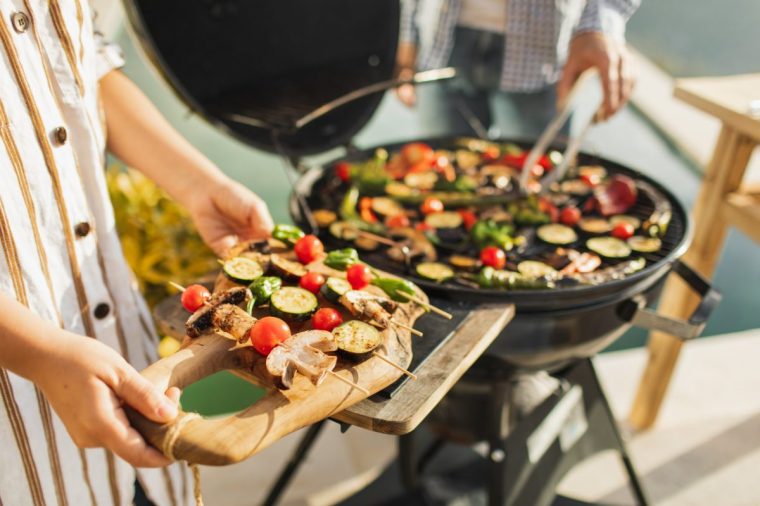
Instead, pack in the antioxidants with some brightly-coloured sides. Make your own veggie skewers. “Pile on red peppers (loaded with vitamin C and antioxidants), courgette (high in fibre), cherry tomatoes (packed with anti-inflammatory antioxidant lycopene) and red onion and finish with some cubes of salty halloumi,” suggests Gill. “Marinate with olive oil, garlic and oregano, thyme or rosemary or try adding smoky paprika, cumin and chipotle paste for a tasty punch and grill. I also love grilled sweet potato wedges with a lime and tahini dressing for a creamy tang.”
Meanwhile, fruit offers a healthful sweet treat. “Grilled watermelon steaks are refreshing, hydrating. They have a slightly smoky flavour when caramelised. Barbecue some thick watermelon slices and finish with a sprinkle of feta, fresh mint, and a drizzle of balsamic,” she suggests.
Grilled pineapple is another classic. “Simply char the chunks and blend with red onion and lime juice for the perfect sweet-spicy kick for fish or chicken; or for a sweet treat, brush the pineapple slices with coconut oil, grill for two to three minutes until caramelised and finish with a dollop of Greek yogurt and drizzle of honey.”
