**"I’m a Gentle Parenting Expert – Stop Raising Kids to Be 'Good'"** This version is more concise, uses active language, and keeps the original message while sounding more engaging and slightly provocative to draw attention.
“How do I make my child do what I want them to do?”
As a parenting coach and author , this is the million dollar question I’m asked daily by parents. Usually these parents are at the end of their tether, exhausted and desperate for a magic solution to make their child obedient, compliant, and ‘good’.
I get it. I’m a mother of four, and I know how hard it is when your children are bickering, the toddler is throwing a full bowl of cereal on the floor, the baby is wailing because their sibling has snatched their favourite toy from them, the five-year-old has smashed your TV because they didn’t listen when you told them to take the ball outside to play, the eight-year-old rolls their eyes when you ask them to hang their coat up, the 13-year-old flat out refuses to do their homework and the 17-year-old outstays their curfew by two hours. On top of this you’re trying to work to a keep a roof over everybody’s heads and food on the table (that they probably won’t eat). Parenting is exhausting . There’s no village, just a sea of conflicting parenting advice and plenty of guilt .
I understand why parents are desperate to produce a child who does what you ask them to do (the first time), doesn’t answer back, and is well… easy. As parents we want a good child. We want them to do well at school. We want them to be polite when Great Aunt Ethel comes to tea. We want them to be a shining example of how well we have raised them and we want them to ‘be good’ for their own good too.
What if I told you that good children are actually problematic?
What if I said that you can’t make a child do anything (you can only ask and guide them and hope they follow), but even if you could, having an obedient and compliant child is not a healthy thing.
Why? Because children who are always good are usually ones who have grown up masking their feelings, putting on an act to please adults in their lives, knowing that they are only lovable when they are calm and good.
They learn that when they are angry, frustrated, and dysregulated they are unlovable, because when they are out of control, the adults in their lives don’t want to be around them. They are punished, ignored, or sent away until they can behave better. Children learn to internalise these feelings, while continuing to put on a good act for their parents.
The problem however is that when these children grow up, they become adults who struggle with anxiety, depression, and low self-esteem. They realise that they are living their whole lives to please others, not really knowing who they are or what they want out of life. This inauthenticity weighs heavy, yet so many don’t realise what is happening. The gaslighting from their childhood still has them believing they were a little tinker, who deserved the punishment.
This is even more damaging for children who struggle to regulate their behaviour because of differences in the way their brains are wired, like those with ADHD . Children with ADHD are commonly described as “naughty”.
Far too many today mistakenly believe that ADHD is “just an excuse for poor parenting and naughty children in need of more discipline”. Of course, this is entirely wrong. ADHD is genetic, with a strong neurobiological basis.
Read Next: The barbecue foods, sauces and sides that aren’t ultra processed
Children with ADHD lag in something called executive function, the ability of the brain to be able to control behaviour, especially impulses. They struggle daily to fit into a world made for neurotypical individuals. They try to be good – they just can’t. It’s not their motivation that’s a problem, but their ability.
Their ADHD means they are highly discriminated against. At school they find themselves in perpetual detentions and isolations. If they had another disability, let’s say they were in a wheelchair and couldn’t take part in a running race at school, and were punished for it, there would be uproar. Because their disability is hidden, however, they face daily discrimination.
The constant pursuit of “being good” and their inability to be good causes them to struggle with their self-esteem and confidence, which ironically, leads to more out of control behaviour, as they learn their place in the world is the naughty one. But it’s not just children with ADHD who struggle with the pursuit of goodness though. It affects all children, but especially girls .
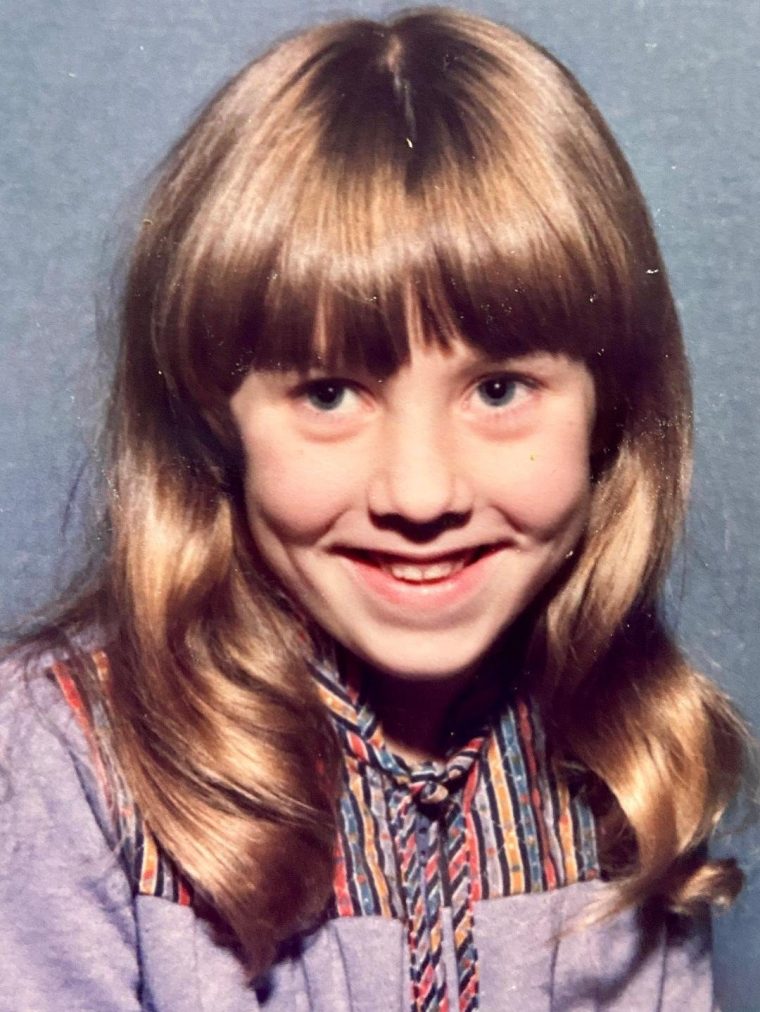
Growing up, I was “a good girl”. I was never much of a bother for my parents. I didn’t get into trouble at school. I learned to read my parents’ emotions and adjust my behaviour accordingly. If they were angry or stressed after a bad day at work I would retreat inside myself and act out my role of compliance and obedience.
As I grew into a young woman, I carried the good girl persona with me. I became a chronic people pleaser, always worried about whether people liked me. Always putting myself out and volunteering to do things that I had no time or headspace for: the school PTA, unpaid overtime at work, helping out anybody who asked me. I never said no. My boundaries were non-existent. Good girls please others, even if it means they run themselves into the ground and completely lose sight of who they are as a person.
It was only when I hit total burn out after a cancer diagnosis that saw me trying to get back to my people pleaser ways only a few days after major surgery, that I had to take a long hard look at myself, my upbringing, and the way it was still affecting me decades later. I’ve since worked hard to build boundaries, to not feel guilty if I can’t, or don’t want to, do something and I’m still working on my need to over-apologise for everything. So many women are similar and it all starts with the way we are raised in childhood.
Yes, it would make our lives easier as parents if our children were good, but the focus on raising a good child needs to change. Children are people too. They are not human becomings, they are human beings. They have feelings now; however inconvenient they may be to us as adults.
Am I insinuating that we should let them do whatever they want? Absolutely not! Discipline is important. As the founder of the gentle parenting movement , I’m well aware that many are confused and think it is permissive, but there is balance . One where the needs of children are considered alongside those of adults. A careful balance of discipline and boundaries, while also considering the implications of what we’re asking of our children.
A fine line between an obsession with raising children to “be good” no matter the consequences, versus raising them to be emotionally happy and healthy and “good enough”.
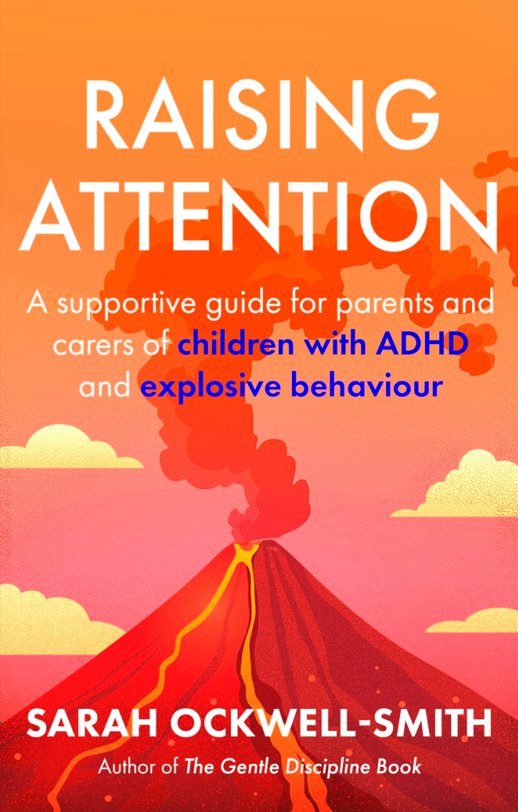
Raising Attention – A Supportive guide for parents and carers of children with ADHD and explosive behaviour by Sarah Ockwell-Smith is out on July 3 (Hachette)
