**KOOP: Tough Calls Belong to Politicians**
The most important story in Canada right now is one you probably haven’t heard about: A sick child has had funding for life-saving medication pulled by the B.C. government. The story raises serious questions about the role of politicians and a concerning lack of regard for vulnerable lives in Canada.
Nine-year-old Charleigh Pollock suffers from Batten disease, a vanishingly rare neurodegenerative condition for which there is no cure. The drug Brineura, however, provides relief to Charleigh, dramatically reducing the number of painful seizures she experiences. It has been so effective that she has even been able to attend school.
The B.C. government previously funded the medication. But earlier this year, bureaucrats in the government’s health ministry decided to cut her off. Their decision was based on guidance from the Canada Health Agency, which suggests that Brineura stops providing benefits after a certain point for those with Batten disease.
Without the drug, Charleigh will almost certainly die — a painful death that no one would wish on a child, or for that matter, anyone.
Charleigh’s parents and her family doctor argue that, whatever the guidelines say, she has clearly benefited from the treatment. Experts in Batten disease have also criticized the decision, arguing that the Canada Health Agency’s guidance is outdated.
Dr. Ineka Whiteman, head of research and medical affairs for the Batten Disease Support Research and Advocacy Foundation, says the decision amounts to “a euthanasia sentence.” “Withdrawing a life-sustaining treatment from a child who is still benefiting from that treatment is effectively an expediting of her death,” she argues.
Families of children suffering from Batten disease around the world are watching this case closely, fearful that what happened to Charleigh in Canada might soon happen to their own children.
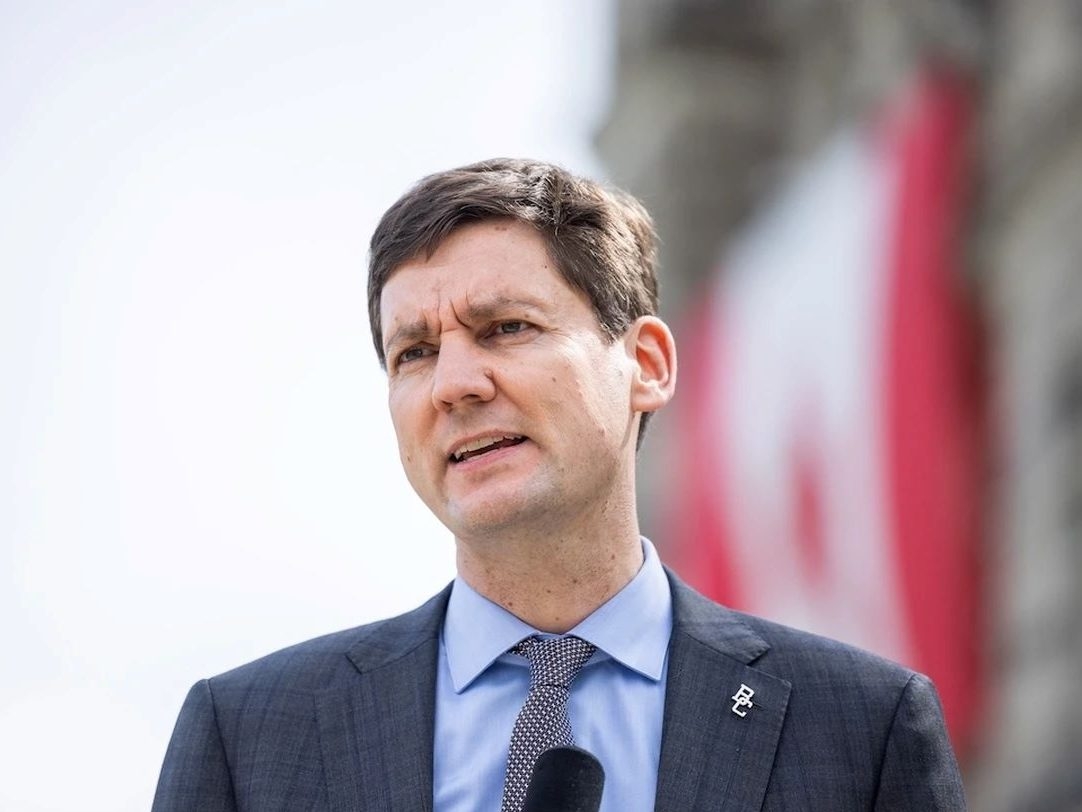
As expected, the decision has brought a wave of negative publicity for B.C. Premier David Eby and Health Minister Josie Osborne. Public calls are mounting for them to override the bureaucrats’ heartless decision and restore funding for Charleigh’s medication.
Yet, bafflingly, they have refused to do so. Eby and Osborne argue that it is not appropriate for politicians to overrule the “experts” — in this case, the civil servants in the B.C. health department. Eby further claims that political intervention would set a bad precedent and that a system in which politicians make decisions on health matters would be “worse” than allowing a child to die.
I don’t know how else to say it: Eby has it completely backwards.
Bureaucrats are experts who exist to advise elected officials. They provide information and guidance. But it is politicians who are elected to make the final call.
We elect politicians to make hard decisions — especially the tough ones. We can hold them accountable for their actions at the ballot box. But we don’t get to vote out bureaucrats.
Eby knows this. He hasn’t hesitated to flex political muscle in other situations. But sometimes politicians hide behind bureaucrats to avoid having to act themselves. That seems to be exactly what is happening here.
Too often, we hear from smug commentators who insist we should always defer to “experts” on every issue. But that’s not how a democracy works.
Experts are valuable, and their advice should be respected. But in a democracy, ultimate decision-making authority lies with the people and their representatives.
This brings us to a second, larger issue raised by Charleigh’s case: In Canada, we appear to be growing less concerned with protecting our most vulnerable citizens.
Consider Track 2 of Canada’s Medical Assistance in Dying (MAID) regime. Track 2 allows individuals with incurable disabilities — but who are not near death — to access euthanasia. This policy was introduced thanks to a Supreme Court decision rendered by nine unelected “experts.”
Disability rights advocates have warned for years that Track 2 puts disabled Canadians at risk. Instead of offering the supports needed for fulfilling lives, MAID creates an easier path toward ending them. There’s now substantial evidence that some disabled individuals have chosen MAID because of unmet needs — not terminal illness.
All life has intrinsic value, and governments must act accordingly. Denying a sick child access to the only drug that helps her is not just callous — it suggests that our declining empathy toward disabled Canadians is expanding into even more dangerous territory.
Premier Eby and his health minister have both the power and the duty to reverse this decision and take a stand for the vulnerable. The question is: Will they?
— Royce Koop is a professor of political studies at the University of Manitoba, and a guest writer for the Winnipeg Sun.
Have thoughts on what’s going on in Winnipeg, Manitoba, Canada or across the world? Send us a letter to the editor at wpgsun.letters@kleinmedia.ca .
