Why This Heatwave Feels Worse Than 35°C – Explained
Heat health alerts have come into force across most of England as the country braces for a second summer heatwave .
An amber alert is in place for East Midlands, south-east, south-west, east and London.
The UK Health Security Agency (UKHSA) has warned health services and all UK residents could be affected by the heat .
Britons on holiday in Europe over the weekend could face temperatures above 40C, with Italy, Greece, France, Spain and Portugal among the countries most affected. On Sunday, Seville, in southern Spain, is forecast to hit 42C.
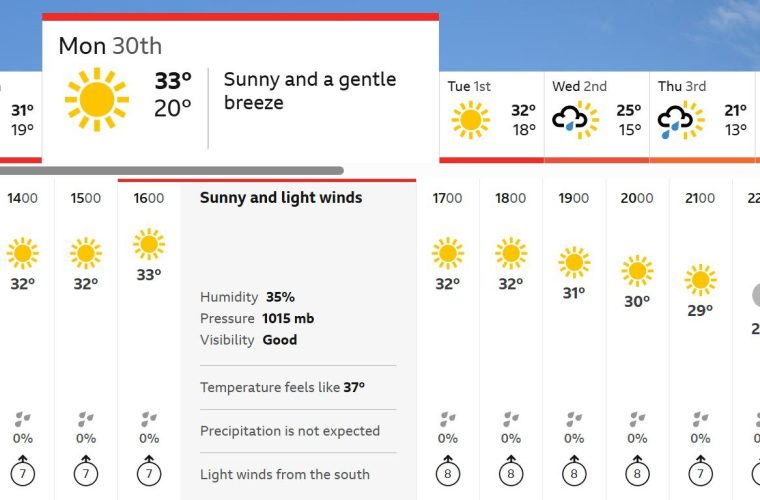
The mercury is tipped to surge to around 30 ° C this weekend in Britain as people attend the Glastonbury Festival, and is forecast to peak at between 33C and 35°C on Monday when Wimbledon starts – making it the hottest day of the year so far.
The blisteringly hot day will feel like 37 ° C due to the so-called ‘feels like’ temperature which is usually a few degrees hotter than official warmth.
The i Paper explains what this is and how it is worked out.
What is ‘feels like’ temperature?
The feels like temperature refers to how hot our bodies feel compared to the environment.
It varies from the air temperature because it takes into account other weather factors like wind, humidity, and cloudiness.
It also takes into consideration how heat is lost from the human body during cold and windy days.
A feels like temperature is used by most forecasters such as the Met Office because it can provide a more accurate depiction of outdoor weather – and also help people prepare for time outdoors.
How is the feels like temperature worked out?
It is calculated based on various elements and meteorological data such as wind speed, relative humidity, dew point, and air temperature.
The feels like temperature measures the predicted air temperature, relative humidity and the strength of the wind at 5 feet.
The feels like forecast also takes into account factors such as high humidity, which can make the weather feel much hotter than its air temperature.
Forecasters do not use a strict formula or method to work out the feels like temperature – and each normally have their own approach.
How does heat index, wind chill and feels like differ?
Another common weather term is the heat index, which means the same as the feels like temperature.
The heat index describes the feels like temperature in the summer, while another term ‘wind chill’ is used interchangeably with feels like temperature in the winter.
But wind chill differs from feels like temperature because it is only a specific calculation of how cold the air feels on exposed skin due to the cooling effect of wind.
There is no official definition of wind chill and definitions vary globally, dependent on how it is measured. the Met Office said.
In the UK, wind chill is worked out by the Joint Action Group for Temp Indices.

The group calculates wind chill by measuring how much heat is lost from a person’s bare face when they’re walking at 3mph.
A formula measures the ‘feels like’ temperature using the air temperature.
The formula is adjusted by taking into consideration changes in wind chill when the temperature is low and the heat index when temperatures are higher.
When there are average temperatures, a combination of wind chill and heat index calculations are used to adjust the formula.
How to stay cool in hot weather
There are various steps you can take to stay cool in hot weather, such as having a hot shower because its it helps to regulate your body temperature, healthy ageing specialist Dr Yassine Bendiabdallah, of Zen Healthcare, a holistic pharmacy in London said.
You can stop getting dehydrated by drinking a glass of water soon after waking and continue drinking water throughout the day, according to Boots superintendent pharmacist Claire Nevinson.
She said: “Staying hydrated is vital on a warm day – to help ensure you do not overheat.”
Read Next: Wimbledon weather: Forecast for each day of Championships and how likely rain is
Carrie Johnson, the wife of former prime minister Boris Johnson, was admitted to hospital this weekend for what she said was “severe dehydration”. She urged “breastfeeding mums” to make sure they eat and drink enough, “especially if your babe is cluster feeding”.
Advice on the NHS website tells new mothers to drink plenty of fluids and to have a drink beside them as the settle down to breastfeed. Water, lower fat milks, lower sugar or sugar-free drinks are all good choices.
Adults can keep their skin protected in a heatwave by using a product with a sun protection factor of 30 and above, while children should use one that is rated 50, Nevinson added.
Professor Tijion Esho, a doctor and wellness expert who founded the aesthetics clinic Cultskin, said that freezing your pillowcase for 10 minutes before going to bed will cool your body down.
